

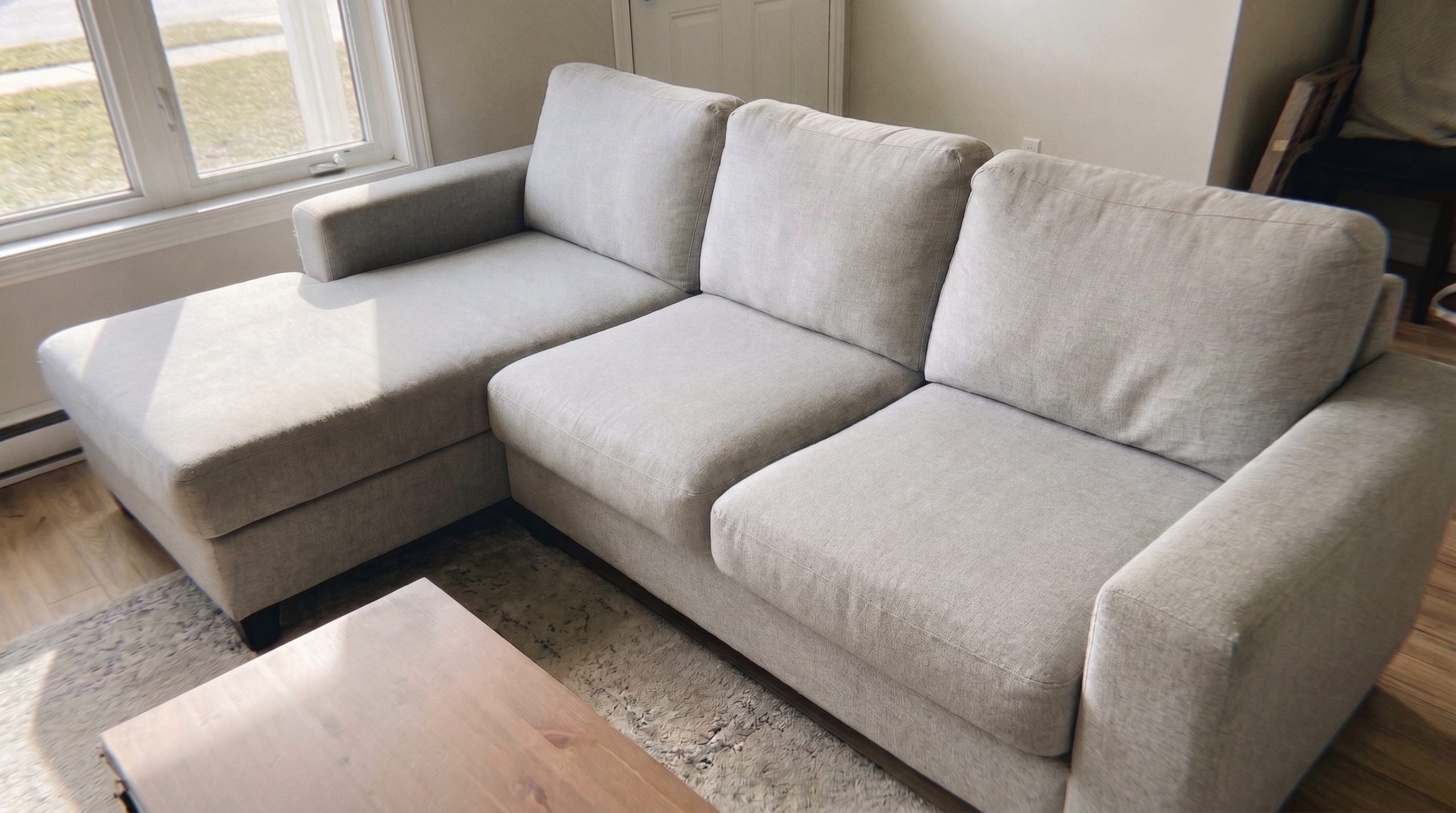
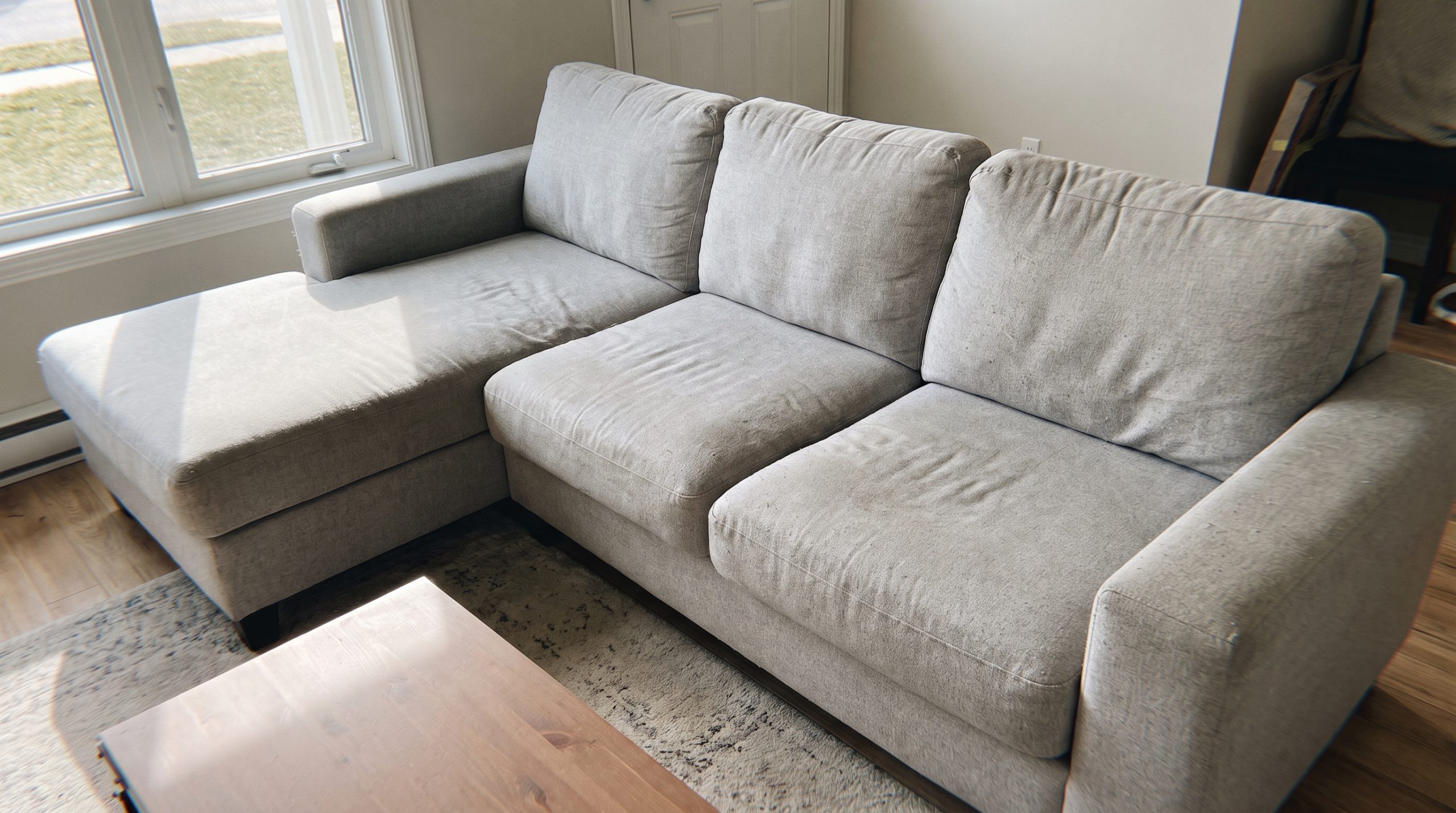
Plant-based pre-treatments break down body oil and pet stains without harsh chemical residue on delicate upholstery fabric.
Every technician is background-checked, in-house, and never a third-party subcontractor, all fully licensed and insured.
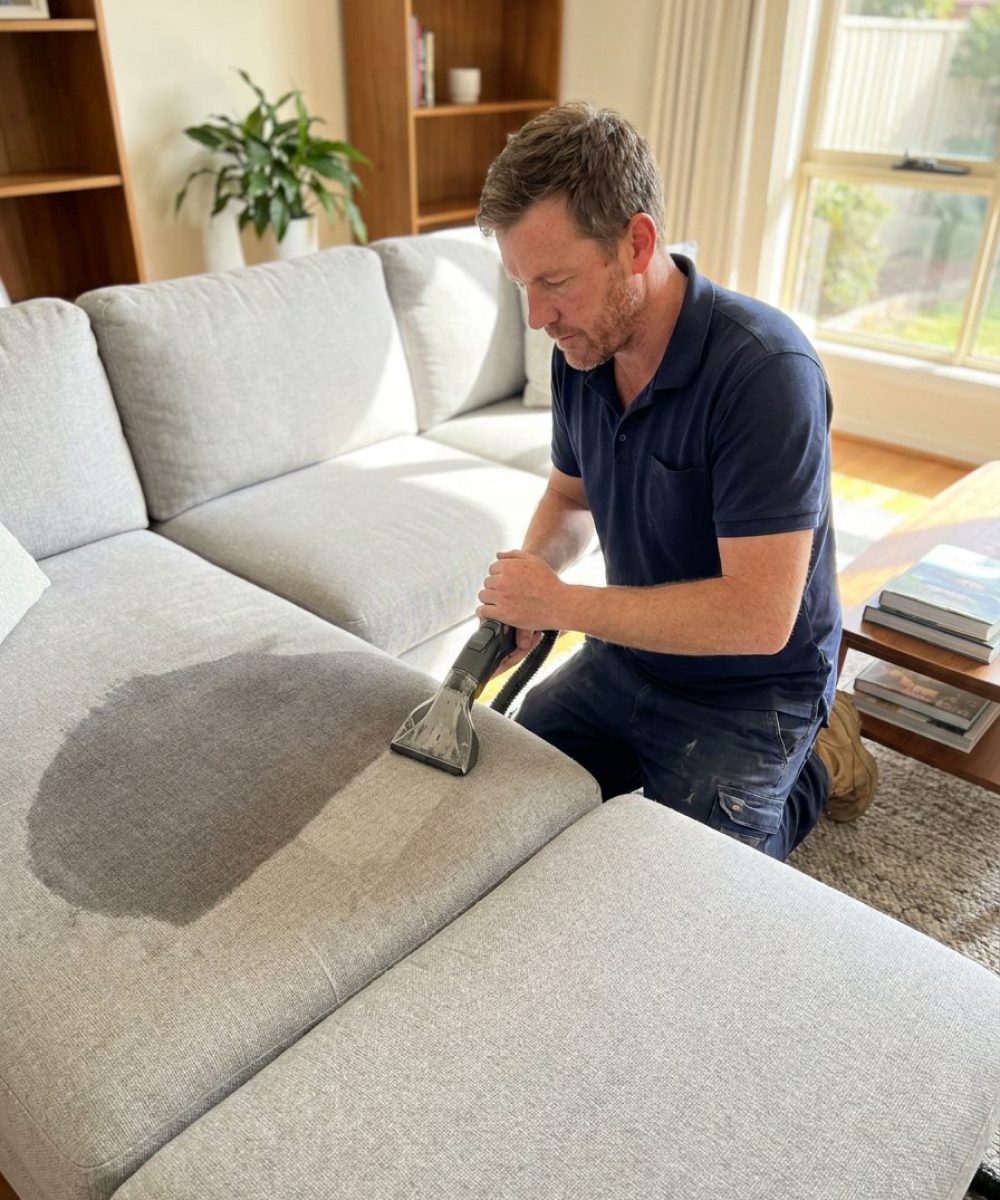
Need fast upholstery cleaning services? We offer flexible same-day scheduling so your sofa dries before guests arrive.
Not happy with a spot we missed? We'll retreat that cushion again at no extra charge.
We inspect your fabric type and test a hidden seam first to check for dye bleed before cleaning.
Body oil and pet stains get a fabric-safe pre-treatment that breaks down soil before extraction starts.
Our upholstery steam cleaner uses light moisture so foam cushions never soak enough to risk mildew.
We groom fibers back into place and run fans so cushions dry within four to six hours.
“Our linen sofa had two years of coffee stains and the crew got every one out. They finished in under three hours and it smelled great.”
“We have a golden retriever and the armchair had a permanent dog smell. After one visit the odor was gone and the fabric felt soft again.”
“They tested a hidden seam on my velvet chair before touching the front, which told me they actually knew what they were doing.”
“Our sectional took about four hours to dry but came back looking almost new, no more ground-in stains on the armrests.”









How often you need upholstery cleaning depends on how the piece gets used. A sofa in a house with kids, dogs, or heavy daily sitting usually needs a professional clean every twelve to eighteen months to keep body oils and dust from settling deep into the fibers. A guest chair that barely gets touched can go longer, sometimes two to three years, before it needs attention. We check fabric condition during every visit and tell you honestly if a piece can wait another season instead of pushing an unnecessary appointment. Regular upholstery cleaning also extends how long the fabric itself lasts before it wears thin.
Most sofas and armchairs dry within three to five hours after we finish, though thicker cushions or humid weather can push that closer to six or seven hours. We use low-moisture steam extraction specifically so foam cushions do not stay soaked, because trapped moisture inside foam is what leads to mildew and a musty smell down the road. Turning on ceiling fans or opening a window speeds things along. We tell every customer not to sit on damp cushions or push furniture back against a wall until the fabric feels fully dry, since that traps moisture against the wood frame underneath.
Our crew is trained to clean a wide range of upholstery materials including cotton, linen, polyester blends, microfiber, and most synthetic velvets. Natural materials like silk or leather need a different approach entirely, so we always check the manufacturer tag and test a hidden seam first before applying any solution to the visible fabric. That test tells us whether the dye is stable and how much moisture the weave can handle without shrinking or bleeding color. If a fabric is too delicate for standard upholstery cleaning methods, we will say so upfront rather than risk damaging a piece you care about.
Yes, our upholstery cleaning process targets pet odor at the source instead of just masking it with fragrance. Urine, dander, and oil from a pet’s coat settle into cushion foam and fabric backing, which is why spray-on deodorizers only work for a day or two. We use an enzyme-based treatment that breaks down the organic material causing the smell, followed by steam extraction to pull the residue out completely. Deep-set stains that have been there for months may need a second pass to fully clear, and we will always tell you honestly if a stain is likely permanent before we start.
A rental upholstery cleaner machine from the grocery store lacks the suction power and heat control our equipment has, so it often pushes more water into the cushion than it pulls back out. That leftover moisture sits inside the foam and can lead to mildew days later, even if the surface looks dry. Rental units also use generic detergent that is not matched to your specific fabric type, which raises the risk of residue buildup or fading on delicate weaves. Professional upholstery cleaning uses commercial-grade extraction and fabric-specific solutions tested on a hidden seam first, so the cleaning power matches what the material can handle.
Our technicians carry spot-treatment formulas built for specific stain types, including wine, coffee, grease, and ink, and we match the treatment to what caused the stain rather than using one generic spray on everything. Older set-in stains take longer to lift and sometimes will not disappear completely, especially if a fabric was never properly treated after the spill happened. We are upfront about that possibility during the walkthrough so there are no surprises afterward. Fresh stains almost always respond well to targeted treatment combined with our upholstery cleaning process, and we always test a hidden area first to confirm the fabric can handle the solution safely.
Yes, our upholstery steam cleaner process uses eco-friendly, non-toxic cleaning solutions that are safe around kids and pets once the fabric is fully dry. We skip harsh chemical deodorizers and heavy fragrance, relying instead on hot water extraction to physically lift dirt and allergens out of the fibers rather than covering up odor. The solutions we use are biodegradable and rinse clean, so there is no sticky residue left behind that attracts dirt faster after the visit. If anyone in the home has sensitive skin or breathing concerns, let us know beforehand and we can adjust the solution accordingly.
You don’t need to move heavy furniture or rearrange your living room before we arrive. Our team handles light repositioning of cushions and small pieces as part of the appointment, and we work around larger furniture like bookshelves or entertainment centers already in place. If there is a specific piece you want cleaned that is currently pushed against a wall or under something heavy, just let us know when you book so we can plan the visit accordingly. Clearing a walking path to the piece being cleaned helps things move faster, but full rearranging is never something we expect from you.
After we finish, keep the room well ventilated by running ceiling fans, opening nearby windows, or using a portable fan pointed at the cleaned piece. Good airflow cuts drying time and helps prevent any musty smell from developing inside the cushion foam. Avoid sitting on the furniture or pushing it back against a wall until the fabric feels dry, usually within three to five hours depending on humidity. Pets should be kept off damp cushions too, since paws can reintroduce dirt into fibers that have not fully set yet. Following these steps after upholstery cleaning helps the fabric look and smell fresh for longer.
Thank you. We’ve received your submission and will get back to you shortly.